

Saying that “abs are built in the kitchen” is about 75% true
Saying that “abs are built in the kitchen” is about 75% true. A proper diet is going to ensure that all visible six-pack muscles are trained, too.
A big prerequisite for a defined stomach involves proper core training, which involves comprehensive, full-body exercises that generate intra-abdominal pressure (think lunges, deadlifts, squats, etc) as well as direct abdominal work (plank variations, ab crunches, reverse crunches).
All of these muscle groups are trained through exercises that happen during the course of a FORM50 class.
From there, your diet and the foods you choose can absolutely define the core. Whether you’re following a diet to lose weight or building lean muscle, the right nutrition makes the difference.
But does having a toned, strong core matter?

Training abs just to have them is still a valid reason to train them. Good aesthetics are a sign that your meaningful work has been put into your physique, so I think this matters a lot.
It also matters because your abdominal muscles and core — meaning the hamstrings, glutes, and lats, too — don’t just benefit you aesthetically.
They’re a crucial set of muscles to build on throughout life to limit the risk of injury and chronic pain.
And just like any other muscle group, they grow with a proper regimen of stimulus — whether it’s the HIIT, eccentric contractions, or cardiovascular aspects of FORM50 — and nutrition intake. Eating the right foods, especially healthy foods to lose weight and support muscle growth, is the other half of the equation.
FK
Fran Kilinski
Nutrition, metabolism, and muscle development
Protein for muscle growth
Muscles tear (at a microscopic level) when stretched and shortened through strength training, and repair themselves during rest.
The repair can be aided, however, by adequately timed protein, carbs (yes, I said carbs), and overall calories.
High-protein meals throughout an active week will lead to more lean muscle growth. Getting enough protein for muscle gain is one of the most important things you can do to support your training.
Regular complex carbohydrates intake will provide your muscles with the fuel to effectively hit your workouts, and keeping your calorie intake near or slightly below your overall expenditure (calorie burn) will help you stay lean and develop the stomach you want. Pairing high protein foods for weight loss with the right carbs is what makes this sustainable.
But it’s also important to determine how your FORM50 HIIT routine and your meals will be structured throughout your day. Knowing what to eat before a workout and what to eat after a workout can make or break your results.
PRE WORKOUT MEAL SELECTION AND TIMING FOR PERFORMANCE
Making sure you optimize your workouts is not just about eating before or after them. Should you eat before a workout? Yes – but it’s about finding the right meal.
IT’S FINDING THE RIGHT MEAL THAT’S:
- Digestible and low-inflammation
- Low-fiber
- Providing the right amount of glucose (sugar) for muscle fuel
- Enjoyable and reliable for you to eat!
- Minimally processed (in most cases)
Most of these foods will be complex carbohydrates, which your body needs to sustain energy during workouts lasting longer than 30 minutes. Carbohydrates will NOT make you gain weight, despite popular misconception, so long as you’re using them strategically to fuel your training. The best pre workout meal is one that gives you energy without weighing you down.
Depending on the time of day you’re training, some complex carbs you might consider 30-60 minutes before your workout could be:
For the morning what to eat before a workout
- Oatmeal (quick oats > steel cut)
- Berry smoothie
- Banana
*Keep portion size in check, as too many oats can be inflammatory for some
Processed but performance-friendly carbs
- Sourdough bread with avocado
- English muffins with nut butter
- Half a bagel with almond butter
Despite being more processed than other foods, these foods consistently lead to higher exercise output.
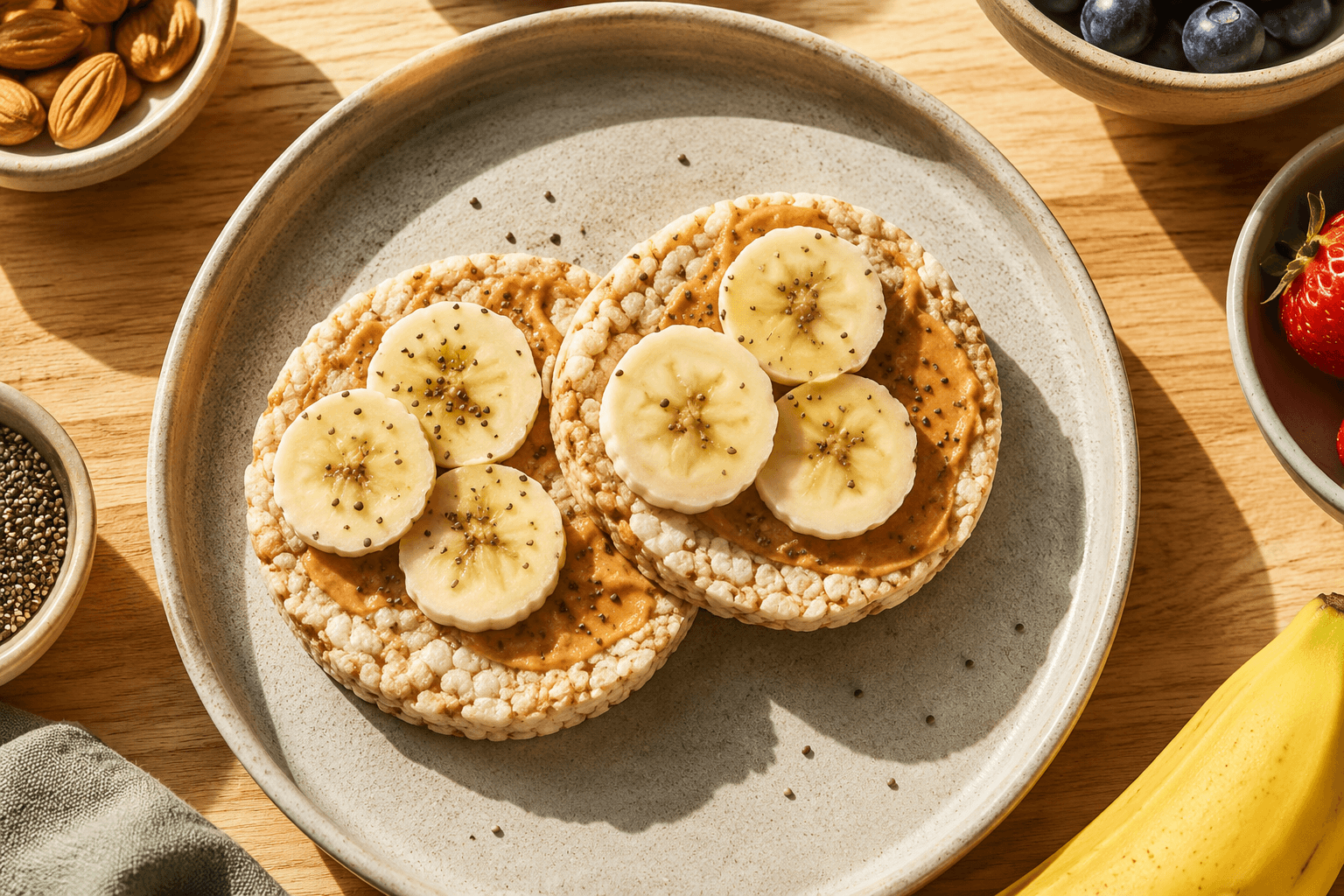
Simple go-to combos (good pre workout meal — easy wins):
- Rice cakes + banana + honey
- Oatmeal + protein powder + fruit
- Toast + egg with rice + cottage cheese
- Fruit, applesauce, or a carb drink with electrolytes
Here’s what to eat after a workout for recovery and muscle growth:
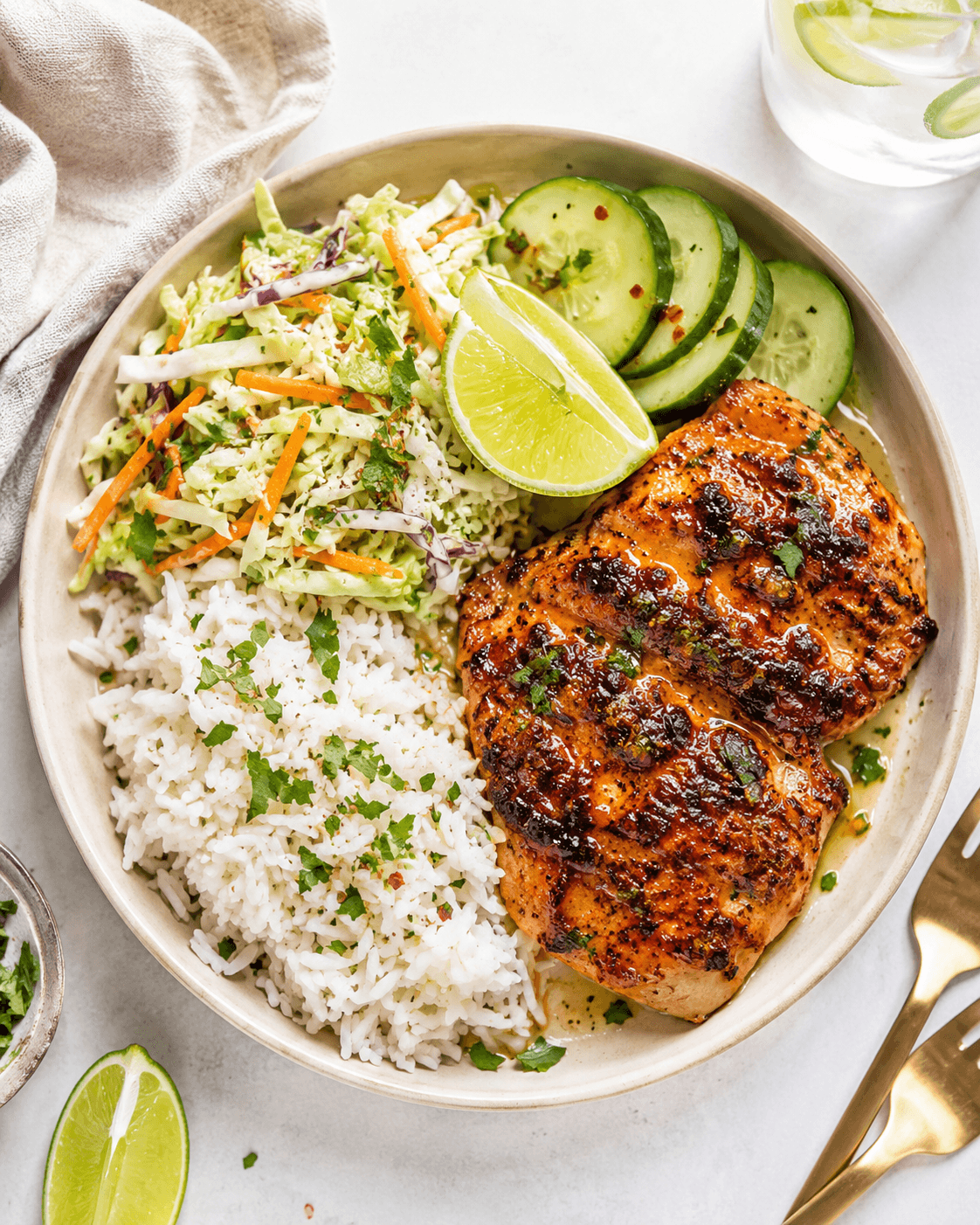
Post-workout meal ideas
- A grilled chicken Caesar salad (light dressing) + a sweet potato or roasted sweet potato
- A shrimp and vegetable stir-fry
- A protein shake with milk of your choice (or water, if you’re getting super lean) + a quick post-workout snack when you’re short on time
- A taco bowl with lean ground beef, bell peppers, black beans, and avocado
All of the above options are protein-forward, which will not only refuel muscle growth and keep you full, but they will also mitigate the soreness felt from intense training sessions. What you eat post workout matters just as much as the workout itself.
HIIT, strength training workouts and other high-intensity exercises will demand lots of protein for muscle growth, and as long as you’re keeping tabs on your total weekly calorie intake, you’re not going to gain excess weight while trying to build the stomach you want.
THE BALANCE
What’s most important for making sure your body responds the way you want it to with the food you’re eating is keeping the quality of your food as high as you can.
That means healthy foods to lose weight – that are minimally processed (because most food these days goes through some form of “processing”) to keep weight and body composition in check.
Optimizing muscle gain and staying in a calorie deficit means avoiding a skewed ratio of protein to carbohydrates. Filling your diet with too many simple carbs relative to total protein can negatively affect lean muscle mass and lead to inflammation, which can show up visually (and on the scale) as unwanted weight.
While fat in foods is not necessarily always a key macronutrient in weight loss, it’s still an important nutrient for regulating this type of inflammation, too. It’s why foods like eggs, Greek yogurt, and other dairy products with certain amounts of fat in them can be essential parts of a lean-muscle building program. These are all high protein foods for weight loss that also support recovery.
There’s really no need to leave any of the macronutrients completely out of your diet when trying to stay lean, but a good macronutrient split for someone who is optimizing their diet for weight loss and keeping things tight is roughly around 35% protein, 40% carbohydrates, and 25% fats.
OPTIMAL MACRO SPLIT FOR LEAN MUSCLE + FAT LOSS
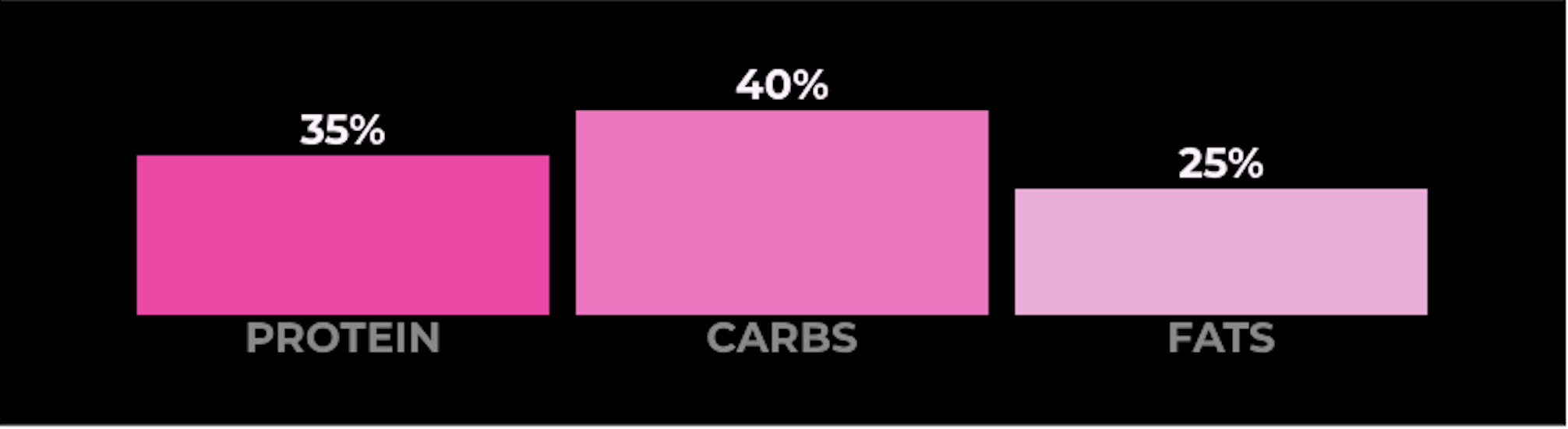
This balance, of course, can be adjusted based on changes to your physique, energy levels and digestion capabilities.
If you are still feeling like the muscles aren’t muscling, you might skew toward a bit more protein for muscle gain, and a bit fewer carbs and fats.
If digestion feels funky, aim for an even balance of all three.
If energy levels dip to a point where they don’t feel sustainable, add a small amount of carbs back in.